
Ancient Wisdom, Modern Healing: What Acupuncture Can Do for You
Thousands of years of tradition. Decades of modern research.
One clear message: acupuncture works, and it might be exactly what your body has been asking for.
If you've ever been curious about acupuncture but held back by questions. Does it hurt? Is it actually backed by science? What can it really treat? You're not alone, because the truth about acupuncture is far more compelling than most people realize.
What Is Acupuncture, Really?
Acupuncture is one of the oldest healing arts in the world. Practiced for over 3,000 years in Chinese medicine, and now recognized by the World Health Organization and the National Institutes of Health as an effective treatment for dozens of conditions.
At its core, acupuncture involves the gentle insertion of very fine, sterile needles at specific points on the body. In traditional Chinese medicine, these points lie along pathways called meridians, channels through which vital energy, or qi (pronounced "chee"), flows. When that flow is disrupted, illness and pain arise. Acupuncture restores balance.
Modern science offers a complementary explanation: acupuncture points correspond to nerve clusters, connective tissue, and fascia. Stimulating these points triggers the release of endorphins, modulates the nervous system, reduces inflammation, and improves circulation, a cascade of healing responses the body already knows how to perform.
Acupuncture doesn't just mask symptoms, it invites the body back into its own healing intelligence.
What Can Acupuncture Help With?
The research on acupuncture has grown dramatically over the past two decades. Here's what it's consistently shown to support:
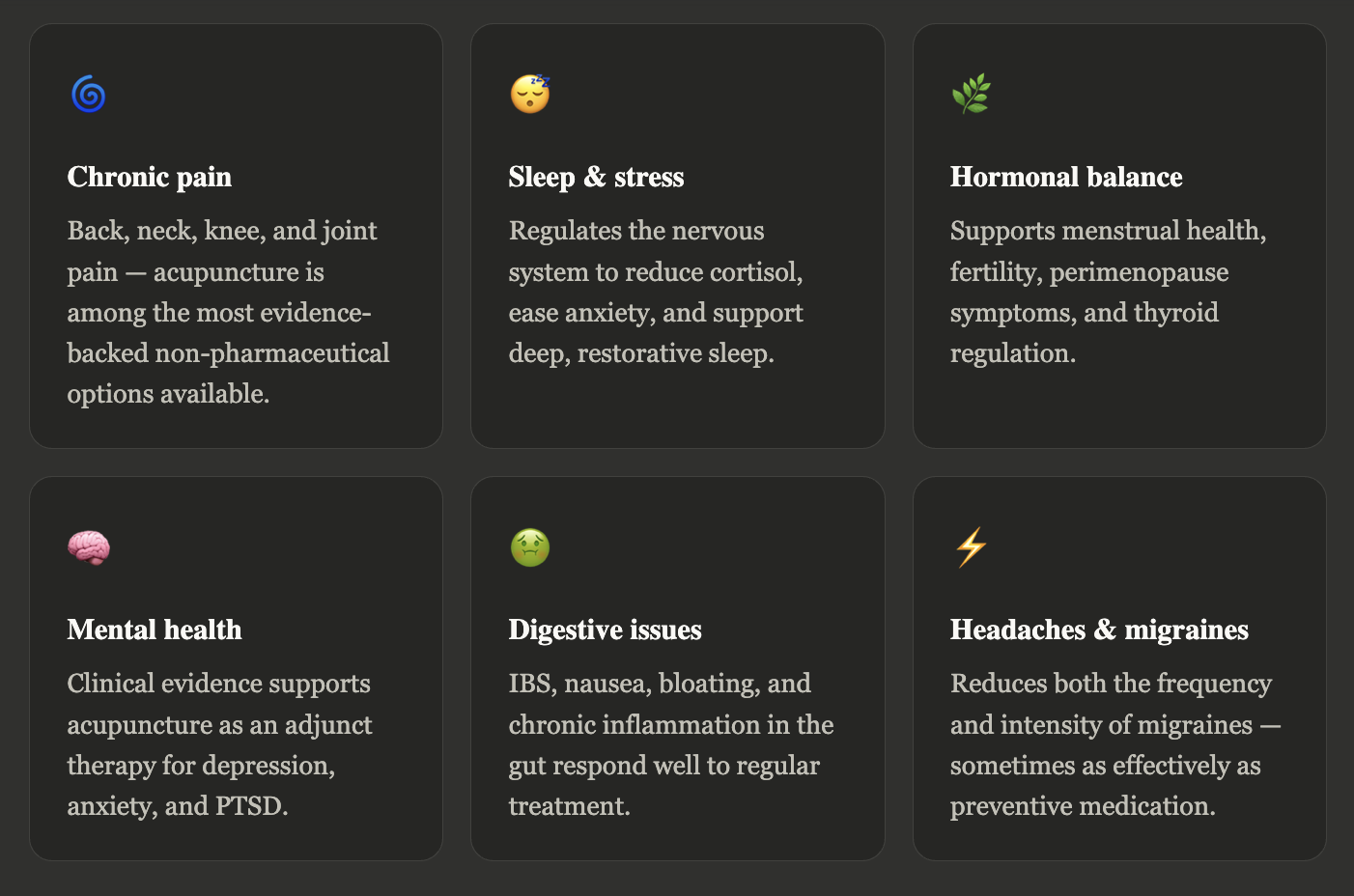
This is not an exhaustive list. Acupuncture is also used to support immune function, speed recovery from injury or surgery, and promote overall vitality in people who simply want to feel their best.
What to Expect at Your First Appointment
One of the biggest barriers to trying acupuncture is not knowing what to expect. Here's a simple picture of what a first visit looks like at Mountain Medicine:
The intake
Your practitioner will spend time getting to know you, not just your chief complaint, but your sleep, digestion, emotional landscape, energy patterns, and health history. Acupuncture treats the whole person, so the intake is thorough and genuinely curious.
The treatment
You'll lie comfortably while very thin, sterile needles - far finer than a hypodermic needle - are placed at specific points. Most people feel little to no discomfort. Many describe a mild heaviness, warmth, or tingling at the needle sites, which practitioners call de qi - the signal that energy is responding. You'll rest quietly for 20–40 minutes. Many people fall asleep.
After the session
Some people feel immediate relief. Others notice changes over the next 24–48 hours. A mild fatigue after your first session is normal, your body is integrating a lot. Staying hydrated and resting well that evening will serve you.
Most patients say the same thing after their first session: 'I didn't know my body could feel this calm.'
Myths Worth Addressing
MYTH
"Acupuncture is only a placebo."
FACT
Sham-controlled trials - where patients receive needles in non-therapeutic points, consistently show real acupuncture outperforms sham treatment. It also produces measurable changes in brain activity, hormone levels, and inflammatory markers.
MYTH
"It's going to hurt."
FACT
Acupuncture needles are roughly the width of a human hair. The vast majority of patients are surprised at how little they feel, and many drift off to sleep mid-treatment.
MYTH
"You need to commit to dozens of sessions before it does anything."
FACT
Many people notice real change within 1-3 sessions. Chronic or complex conditions benefit from a longer course of treatment, but results are rarely as slow to arrive as people fear.
Meet Our Acupuncturist at Mountain Medicine
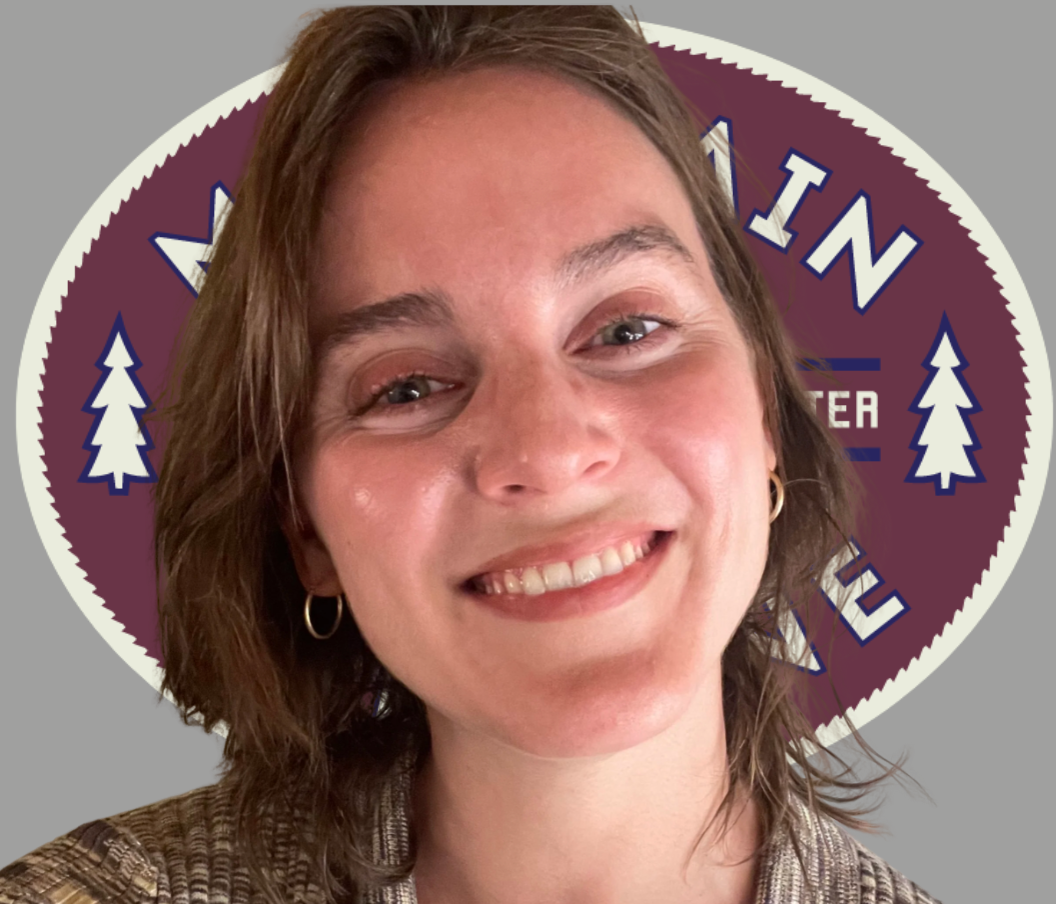
Colleen Hiban L.Ac
I am a licensed acupuncturist in the state of Arizona. My training began at The Won Institute in Philadelphia, PA, where I studied the foundations of Traditional Chinese Medicine. I later continued my education at the Academy for Five Element Acupuncture in Gainesville, FL, where I deepened my understanding of Five Element theory and its applications.
My decision to pursue acupuncture professionally grew out of my own healing. Acupuncture shifted the way I breathed, felt, and moved through the world. It gave me space to reconnect with myself and offered a profound sense of change that continues to guide me. Experiencing this transformation firsthand inspired me to dedicate my life to the practice of acupuncture.
My practice is rooted in attunement, curiosity, and presence. I aim to help clients cultivate greater ease and balance in their bodies and lives. Through treatment, I support the release of internal discomfort while enhancing resilience across the mental, emotional, and physical dimensions of well-being.
Acupuncture as Part of Integrative Care
At Mountain Medicine, we believe healing rarely happens in a silo. Acupuncture is most powerful when it's woven into a broader picture of care alongside lifestyle guidance, chiropractic, massage and conventional medical support when needed. That integrated approach is what sets our practice apart from a standalone clinic.
Whether you're managing a chronic condition, recovering from an injury, or simply looking for a deeper sense of wellbeing, acupuncture offers something rare: a therapy that meets your body where it is, and helps it remember how to heal.
Curious about whether acupuncture is right for your specific situation? Schedule a free 15 minute consult today!
Ready to Experience It for Yourself?
Our licensed acupuncturists at Mountain Medicine are here to create a personalized treatment plan built around your body and your goals.
Curious about whether acupuncture is right for your specific situation? Schedule a free 15 minute consult today!